Find the real sources of friction
We review customer journeys, device behaviour, performance data, recurring support issues and the store’s technical condition to identify where improvement will matter.
- Practical administration
- Room to evolve
Targeted improvements to performance, usability and technical foundations can make an established store faster, easier to buy from and more dependable to manage.
Effective ecommerce optimisation begins by understanding where customers struggle, where performance deteriorates and which technical issues create risk or restrict improvement.
We review customer journeys, device behaviour, performance data, recurring support issues and the store’s technical condition to identify where improvement will matter.
Recommendations are ranked by customer impact, operational value, technical risk and effort so the work begins with changes that have the strongest practical case.
An ecommerce store can remain operational while gradually becoming slower, harder to use and more difficult to maintain. Individual issues may appear minor, but together they create friction for customers and the people responsible for the site.
Large assets, accumulated scripts, inefficient requests and ageing templates can delay browsing, particularly on mobile devices and less reliable connections.
Unclear navigation, weak product information, awkward mobile controls and unnecessary checkout steps make customers work harder to complete their journey.
Outdated extensions, layered overrides and unresolved technical issues make routine updates harder to predict, test and maintain safely.
Ecommerce optimisation works best as a controlled cycle. We assess current performance, prioritise what matters, implement changes carefully and validate the effect across the wider store.
We examine page speed, mobile usability, key customer journeys, technical condition and available store data to build a clear picture of current performance.
Findings are ranked by customer impact, operational value, technical risk, dependencies and the effort required to address them properly.
Performance, usability and technical changes are introduced in manageable groups so they can be reviewed and tested without unnecessary disruption.
We test across devices, browsers and important journeys, compare dependable measures where available and identify where further refinement is worthwhile.
An existing ecommerce store is shaped by what customers see and the technical foundation underneath it. Meaningful improvement considers both, rather than treating speed, usability and maintainability as separate problems. Zen Cart improvement and upgrade work is delivered through our specialist Zen Cart Solutions arm.
Navigation, product pages, mobile behaviour, search and checkout can be refined to reduce unnecessary effort and make important information easier to understand.
Performance bottlenecks, ageing extensions, layered template changes, recurring errors and update constraints can be addressed to improve stability and maintainability.
Store optimisation is often a sequence of focused changes rather than one large redesign. Each improvement should solve a clear problem while respecting the catalogue, integrations and customer journeys already in place.
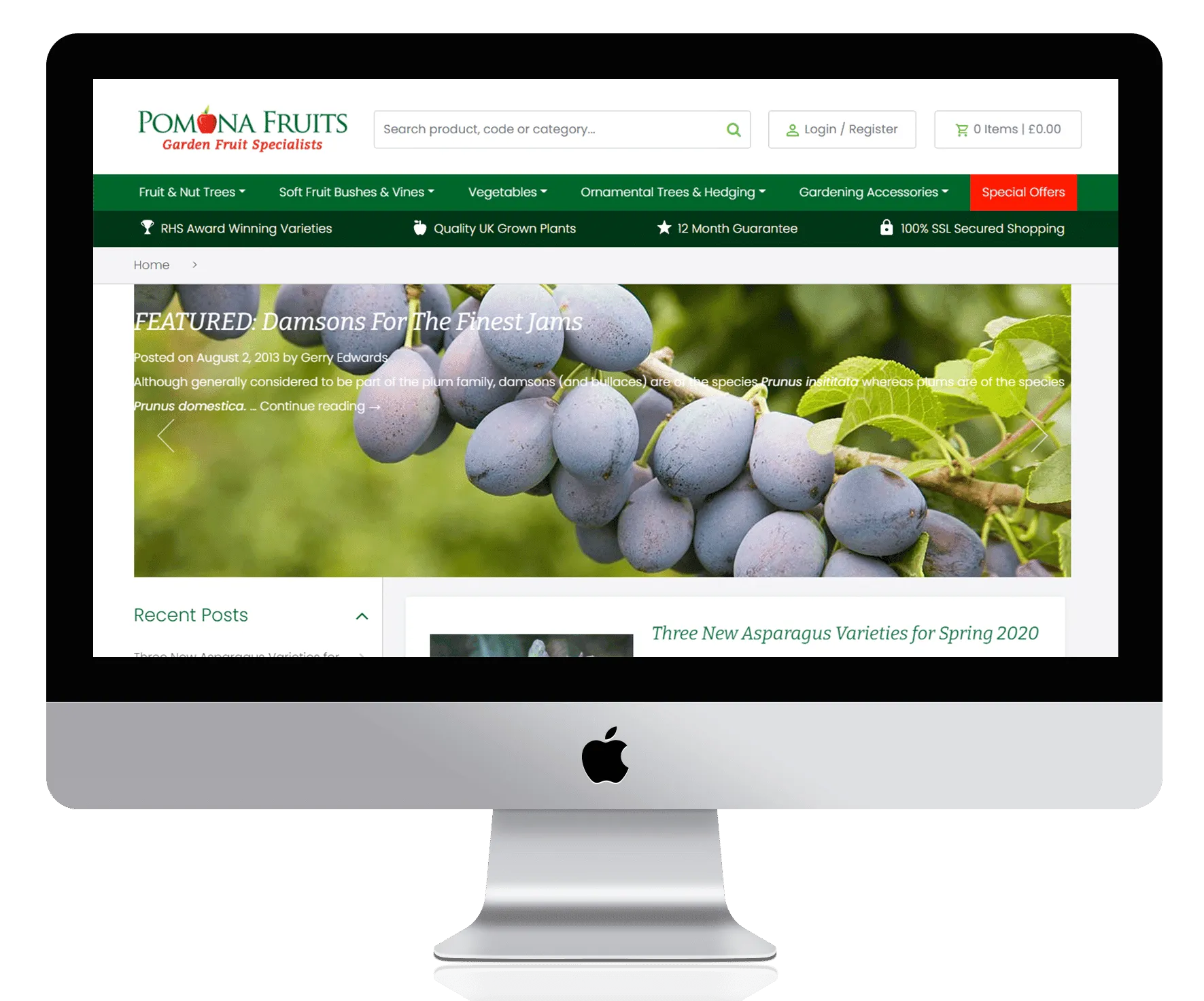
Pomona Fruits has evolved through targeted improvements to catalogue presentation, variant-aware buying journeys, mobile usability and supporting product content. The work strengthens an established Zen Cart store without treating every new requirement as a reason to rebuild it.
Common signs include slower pages, awkward mobile journeys, recurring checkout friction, difficult updates and technical issues that repeatedly return. A structured review helps distinguish isolated problems from broader platform limitations and identifies which improvements deserve priority.
Often, yes. If the current platform remains secure, supportable and fundamentally suitable, focused performance, usability and technical improvements can extend its useful life. Where the foundation itself has become the constraint, a planned Ecommerce Websites project may be more appropriate.
Improvements can cover navigation, product pages, mobile usability, site search, checkout, page speed, code health, updates and technical SEO. If the requirement involves substantial new behaviour rather than improving what already exists, our Custom Ecommerce Development service may be the better fit.
Yes. We investigate the causes before recommending changes, which may include large assets, accumulated scripts, inefficient requests, template behaviour or hosting constraints. The appropriate work depends on the store, so we do not promise a fixed performance score without first examining it.
Yes. We can review layouts, controls, validation, content clarity and unnecessary steps across important customer journeys. Changes are tested across relevant screen sizes and browsers so that improving one area does not introduce friction elsewhere.
Yes. Zen Cart has been a core specialism of the business for many years. Improvement, upgrade and technical maintenance work for established Zen Cart stores is provided through our specialist Zen Cart Solutions arm.
Cost depends on the issues identified, the condition of the existing store, technical dependencies and whether the work is delivered as a focused project or continued improvement. We provide a written estimate for defined work, while ongoing development can be arranged through Long-Term Support.
Tell us where the store feels slow, difficult to use or harder to maintain. We’ll help you identify practical priorities and a sensible route forward.