Define the real need
We examine how the platform works now, who the functionality must serve and why configuration or existing extensions do not provide a dependable answer.
- Practical administration
- Room to evolve
When standard features and extensions stop short, we create bespoke ecommerce functionality around your products, customers, team and operational processes—without replacing a platform that otherwise works.
Custom ecommerce functionality is most valuable when it removes a specific limitation, supports a proven process or creates an experience that standard extensions cannot provide.
We examine how the platform works now, who the functionality must serve and why configuration or existing extensions do not provide a dependable answer.
The solution must work with the platform’s data, checkout, integrations and upgrade path, remaining understandable and maintainable after launch.
Off-the-shelf ecommerce features can cover common requirements, but unusual products, pricing, customer journeys and administrative processes often expose gaps that configuration alone cannot solve.
A required buying, pricing or catalogue behaviour cannot be achieved reliably through the platform’s existing settings or available extensions.
Staff repeat manual steps, reshape established processes or maintain information elsewhere because the store cannot support how the business operates.
Combining several overlapping extensions can introduce conflicts, inconsistent behaviour and a growing maintenance burden without fully solving the requirement.
Custom ecommerce development should account for the existing platform, surrounding extensions, real user journeys and the conditions that fall outside the expected path. We define those factors before building, then test the result in context.
We establish what the functionality must achieve, who will use it, which information it depends on and how unusual or incomplete scenarios should be handled.
We review the platform architecture, existing extensions, data structures and upgrade implications before defining a maintainable technical solution.
The functionality is developed in controlled stages and tested against normal journeys, edge cases and its effect on the surrounding store.
Final checks, deployment planning and clear documentation help introduce the change safely and provide a sound basis for future support.
Bespoke ecommerce development can improve customer-facing journeys and the operational tools behind them. Our work includes long-standing Zen Cart development, delivered through our specialist Zen Cart Solutions arm.
Custom functionality can support specialised product choices, pricing rules, account features and checkout journeys that standard platform behaviour cannot provide.
Purpose-built administration can make complex catalogue work, order handling, internal controls and reporting easier for the people responsible for the store.
Bespoke ecommerce work is most effective when it turns a specific commercial requirement into a clear, maintainable part of the customer journey and store operation.
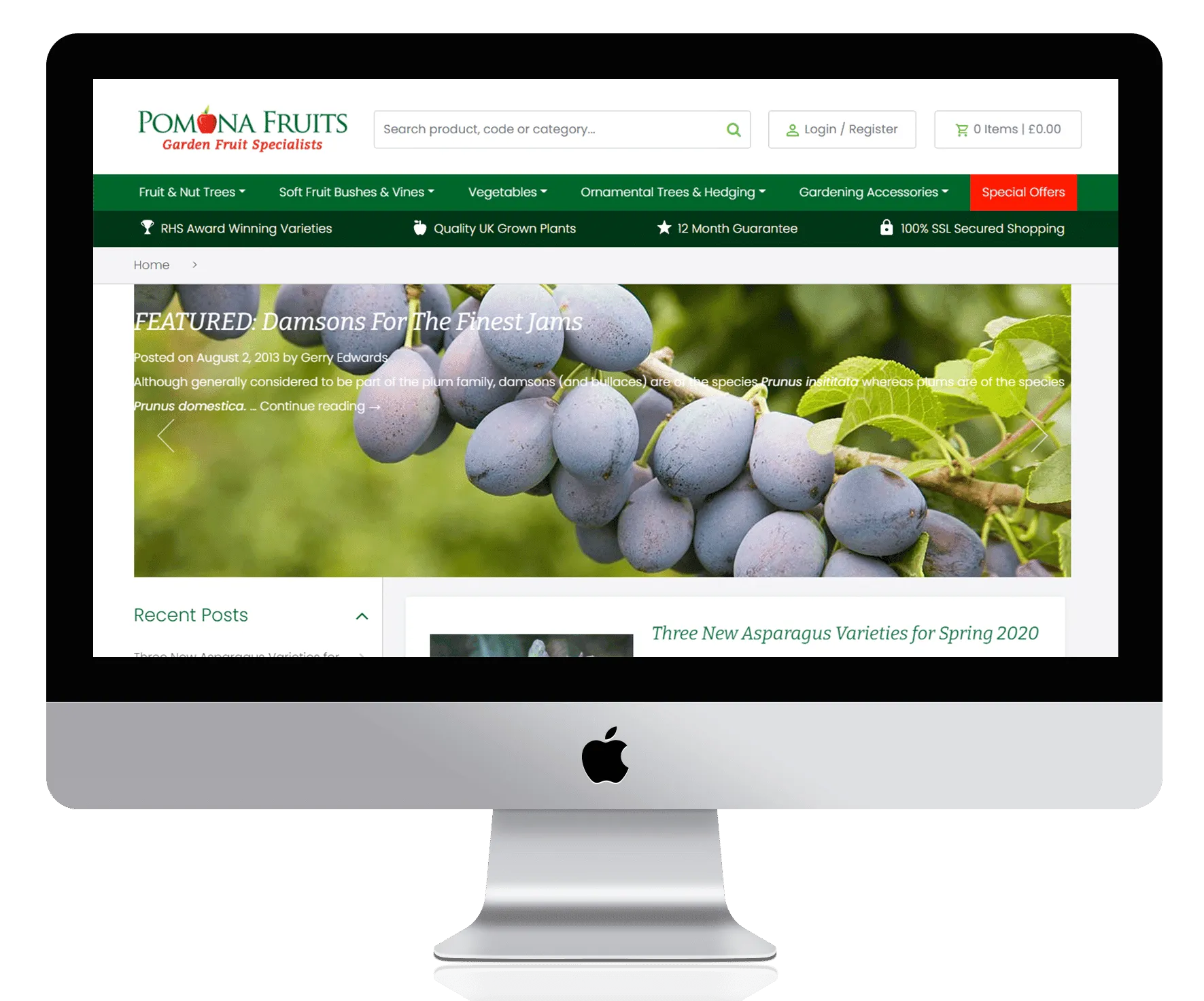
Pomona Fruits operates an established Zen Cart store with a detailed catalogue, product variants and data supplied by its Khaos business-management system. Ongoing custom development has added catalogue and buying functionality around requirements that standard platform behaviour could not address cleanly.
Custom ecommerce development creates functionality specifically for a store when standard settings or existing extensions cannot meet the requirement reliably. It can shape customer journeys, catalogue behaviour, pricing, accounts, checkout or administration without necessarily replacing the underlying platform.
An established extension is usually preferable when it meets the requirement cleanly, is actively maintained and fits the existing platform. Custom development becomes appropriate when the requirement is business-specific, available extensions solve only part of it or combining multiple add-ons would create unnecessary complexity.
Often, yes. If the current platform remains secure, supportable and fundamentally suitable, new functionality can be developed around it. Where the platform itself has become the constraint, a planned Ecommerce Websites project may be the better option.
Examples include product configuration, pricing rules, customer-specific features, checkout flows, administration tools, catalogue controls and order workflows. When the main requirement is a dependable connection between separate services, our Platform Integrations work may form part of the solution.
Yes. Zen Cart has been a core specialism of the business for many years. Custom Zen Cart development, upgrades and specialist support are provided through our dedicated Zen Cart Solutions arm.
We define expected journeys, edge cases and dependencies before testing the functionality within the surrounding store. Clear documentation and ongoing maintenance can then be provided through our Long-Term Support service.
Cost depends on the requirement, the existing platform, technical dependencies, edge cases and the amount of testing and deployment work involved. We first investigate the requirement and then provide a written estimate or proposal for the agreed scope.
Tell us what the platform needs to do, where standard features fall short and how the requirement affects customers or your team. We’ll help you define a practical route forward.